What Is a DRS Train in F1?
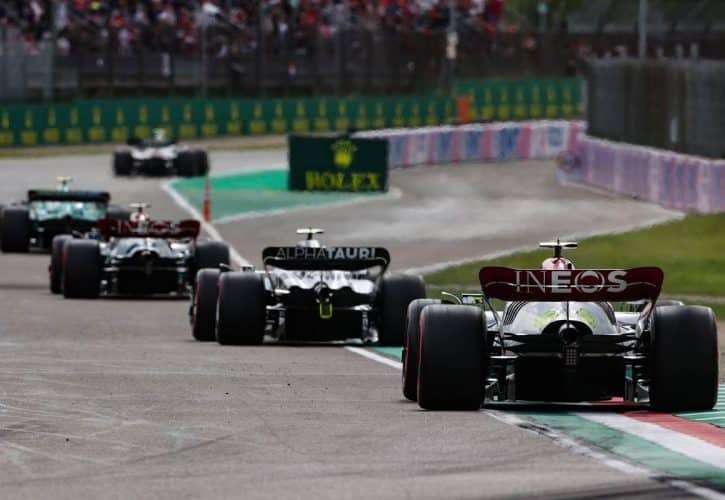
A DRS Train happens when multiple F1 cars are driving within 1 second of each other so they all get to activate their DRS system at the same time . In this situation, none of the cars benefit from the DRS, and overtaking is nearly impossible.
The car at the head of the train will not have DRS, so it must be fast enough in the DRS zones for the immediately following car not to be able to overtake, even with DRS. This then means that the cars further down the train are trying to use DRS to overtake a car in front that also has the benefit of DRS, and therefore it gives no performance advantage.
That’s when drivers typically resort to undercutting or overcutting strategies. I’ll explain how this works and more about the DRS train below!
What Is the DRS?
DRS stands for “Drag Reduction System”, which is a driver-controlled mechanism that opens up the middle section of the car’s rear wing.
Doing this will reduce aerodynamic drag on the car, improving overall speed by 6-7 mph (more or less). The reason why this works is aerodynamics – with the rear wing open, the car’s overall surface area is diminished, offering less resistance to the frontal air flow.
So, activating DRS gives an F1 car a speed boost designed to encourage overtakes on long straights. But activating the DRS doesn’t necessarily result in an overtake. The driver’s skill is still the most important element of the manoeuvre.
But the DRS can (and has) turned the tables on the competition, giving pursuing drivers the oomph they needed to overtake and gain track position.
How Does a DRS Train Happen?
A DRS train occurs when a car using DRS can’t overtake the car in front. The two cars begin driving nose-to-tail , and eventually, other cars will queue up behind them.
Every other car in the back will activate their DRS, forming a DRS train. You’ve likely seen this happen many times on TV or at the race, if you’re an F1 fan.
Multiple F1 cars are closely following one another, with none being able to overtake the other, and this keeps going for quite some time.
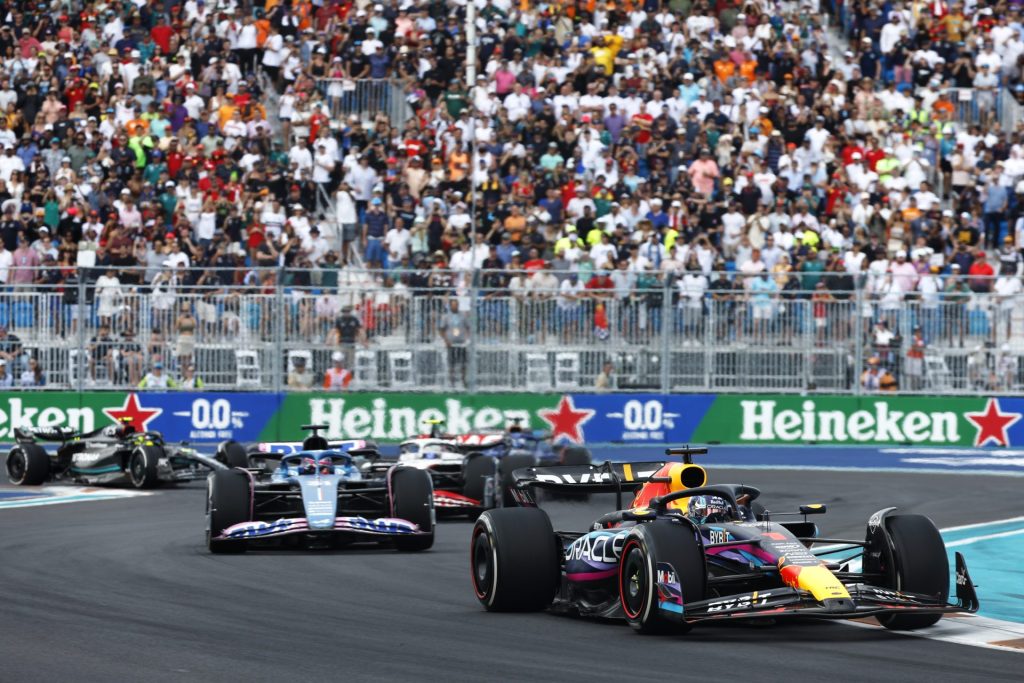
That’s because the effect of the Drag Reduction System is effectively nullified if every car has it active. They’re all receiving the speed boost, except the car in front.
When this happens and drivers realise overtaking is impossible, they usually resort to pit box strategies like undercutting or overcutting. Doing this will give them the advantage of clean air, fresh tyres, and low traffic.
How Do Drivers Prepare for a DRS Train?
There isn’t a specific way you can prepare for a DRS train because they’re unexpected and you can only react to one once it occurs.
Drivers could try and anticipate that a DRS train might happen but it wouldn’t necessarily do any good. Pitting early during inopportune moments might put you at a disadvantage.
Most drivers prefer to maximise their performance, wait and see if a DRS Train does occur, and then react accordingly after consulting with their team via radio.
When they become part of a DRS Train, drivers push hard to overtake the cars in front. If they’re able to do that, then the train will slowly break apart.
But typically, overtaking isn’t possible because all cars in the queue benefit from the DRS speed boost, so no car is particularly faster than the others.
How Do Drivers Escape a DRS Train?
There aren’t too many options to escape a DRS Train once you’re stuck in one. Just look at the picture below and you’ll understand.
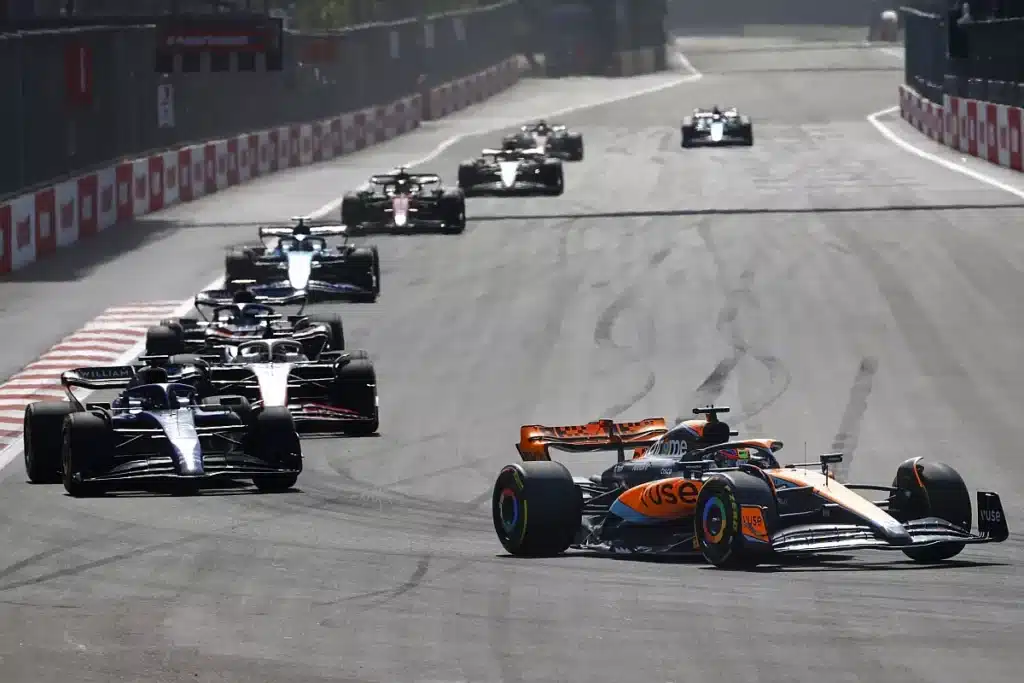
The car in front isn’t inconvenienced at all. They benefit from clean air, they don’t have a car ahead, and they are the head of the train.
It’s all the other cars forming the DRS Train that are put in a tough position. The first in the queue can’t overtake the leading car for one reason or the other, while the other cars all activate DRS.
No one has any speed advantage, and so there’s a stalemate. In this situation, drivers only have one option – pit early.
Undercutting the entire DRS Train, in other words, is the most effective counter-strategy to the stalemate.
This will take them through the pit lane, with fresh tyres and clean air, so even though they’ll come out behind the other cars, they’ll likely drive much faster than them, when the others do eventually pit, they will have overtaken them.
This strategy is less effective in case the Safety Car or Virtual Safety Car come out on the track, though. The other cars will have more of a time advantage pitting under the SC/VSC because everyone else will be driving slower, giving them more time to finish pitting.
When Are DRS Trains Most Common?
The DRS Train phenomenon is most likely to appear on tracks with short straights where overtaking is theoretically possible but hard to accomplish.
When the drivers stack up within one second of each other (minimum DRS range) and everyone has DRS active, that’s when DRS Train forms up.
The leading driver doesn’t have DRS active but the runner-up can’t find an opportunity to overtake them, and this is keeping the rest of the drivers bunched up.
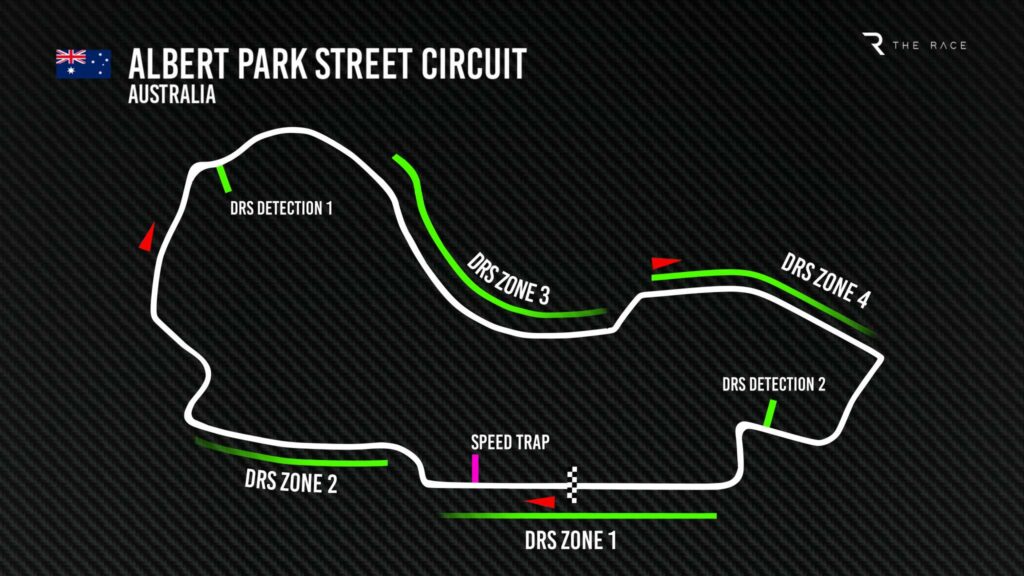
Tracks with fewer DRS zones and whose layout leads to particularly difficult overtakes will see a lot more DRS trains compared to tracks with more DRS zones, where the DRS will more successfully allow cars to overtake. For instance, the Albert Park circuit has the most DRS zones of any other circuit, with four zones.
Compared to Monaco, which only has one DRS zone between turn 19 and into turn 1, it’s clear how Monaco will see substantially more DRS Trains than Monaco. There’s also the fact that the Monaco track is notorious for how difficult it is to overtake.
Divisive Opinions About the DRS System
The Drag Reduction System isn’t sitting well with some drivers, and this has been the case since the technology’s introduction in 2011.
At one point, Juan Pablo Montoya described it as “giving Picasso Photoshop”, while most drivers on the track today use it gladly to eke out an advantage.
You only need to look at the battle between Charles Leclerc and Max Verstappen at the 2022 Bahrain Grand Prix. The two drivers took turns as lead driver, and Leclerc said that the DRS played a big part in his competitiveness.
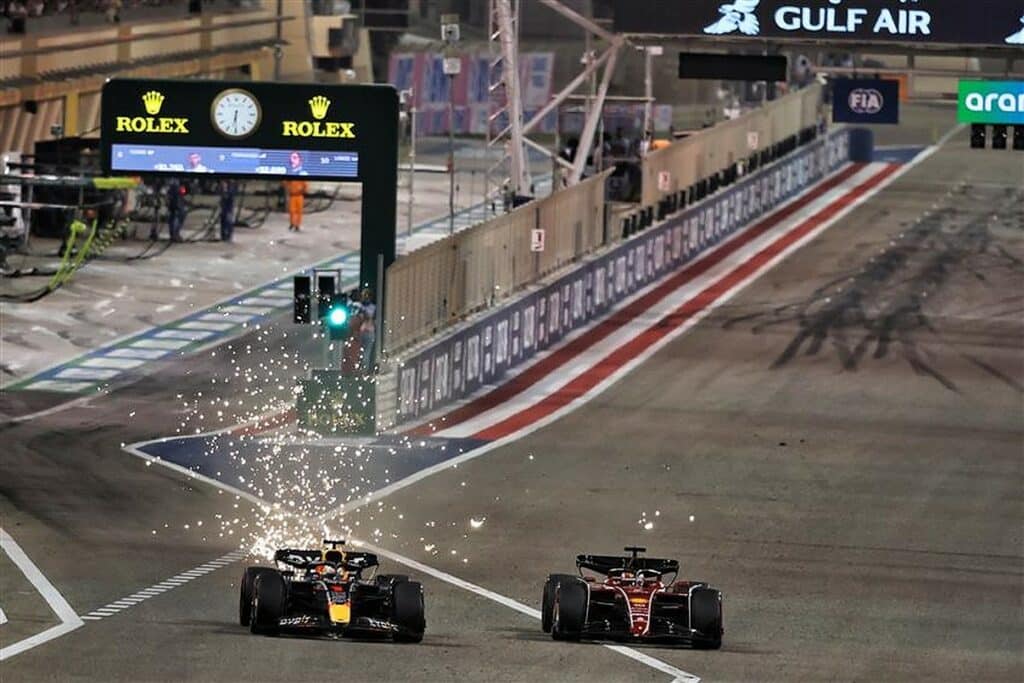
He used the DRS Zones on the circuit strategically and, for the most part, it worked in his favour.
While it’s true that the DRS gives an artificial speed boost, it’s not exclusive to some drivers, and it’s still a part of the car’s aerodynamic makeshift.
If we consider the DRS unfair, at which point do we start condemning other aerodynamic elements on the F1 car for their unfair top speed advantage?
Conclusion
The DRS Train is one of the more unpleasant aspects of Formula 1 for drivers and teams. From the fans’ perspective, it forces drivers to alter their game plan and use pit box strategies to overcome the train.
It leads to variability in the race dynamics and, while this might not sit well with some drivers, it also leads to opportunities.
Leading the DRS Train is a very advantageous position to be in but it’s difficult to get there and maintain it.
In the end, the DRS Train phenomenon will exist for as long as the Drag Reduction System will remain in Formula 1!