What Is an Overcut in F1?
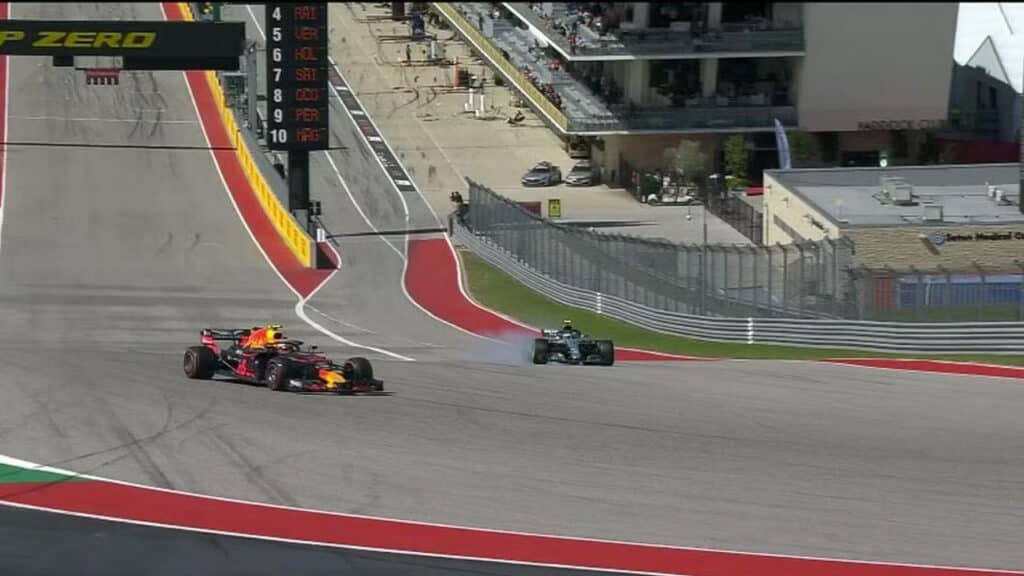
The overcut is a strategic pit stop manoeuvre used to overtake the car in front by pitting a few laps later than them. The driver doing the overcut will use the clean air and zero-traffic advantage to gain time over the pitted driver, who may have struggled to heat their tyres up or come out into traffic.
If he manages to pit later and then come back out into the race ahead of the earlier pitted driver, then the overcut was successful.
The overcut used to be much more powerful back when refuelling mid-race was allowed because the car on the track would be lighter than his pitted competitor.
Nowadays, the overcut is mostly used on tracks with few high-speed corners and low grip where the tyre degradation rate is lower, and the new tyres get up to the right temperature much slower.
Let’s explore the overcut in greater detail below!
How Does the Overcut Work?
To help you understand how the overcut works, I’ll use a famous example from the 2021 Monaco Grand Prix, when Sebastian Vettel overcut both Pierre Gasly and Lewis Hamilton in one of the most effective manoeuvres seen on the track.
Initially, Hamilton decided to undercut Gasly (who was in front) while on lap 29, so he pitted. Gasly did not pit and continued driving.
Gasly’s old tyres were already at the right temperature, so his grip was better than Hamilton’s fresh tyres.
And this wouldn’t have been an issue normally if Hamilton could heat his fresh tyres quickly enough. But the Monaco track is notoriously bad in that department.
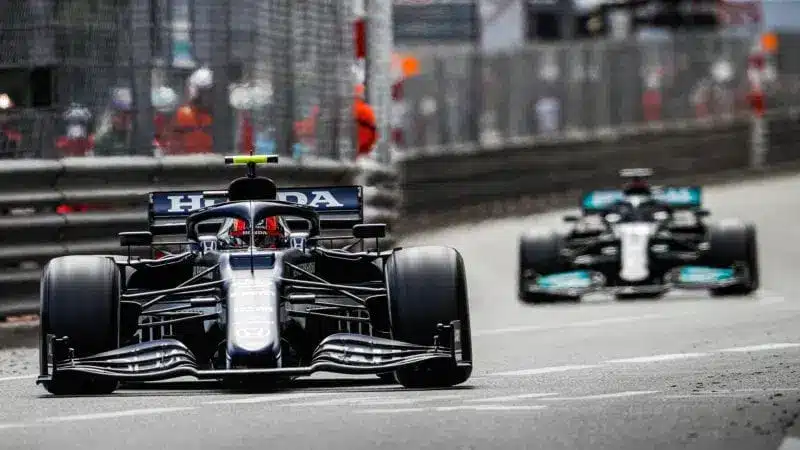
The low asphalt grip and the low number of high-speed corners means that it takes longer for the tyres to heat up. And that’s exactly what happened to Hamilton.
Gasly managed to lap a lot quicker than him and increased the gap between them, emerging in front of the British driver when he finally did pit. This was mainly Hamilton’s failure at an undercut.
A bit later, Sebastian Vettel achieved a superb overcut and became the lead driver by pitting two laps later and leapfrogging both Gasly and Hamilton. It was a risky manoeuvre to stay out that long on the track without fresh tyres but it paid off in the end.
Clean Air, Grip, and Tyre Heat
The three elements that allowed Gasly (and Vettel two laps later) to overcut successfully were:
· Clean Air
Driving without another car in front allows you to utilise the full aerodynamic potential of your car. There’s nothing that obstructs the airflow, sending low-air pressure toward you.
This makes you go faster and achieve faster lap times, and an F1 car always drives faster in clean air vs. dirty air.
· Grip
Grip is a terribly important concept in F1. The cars’ tyres need grip to stick to the asphalt and achieve maximum speed and performance.
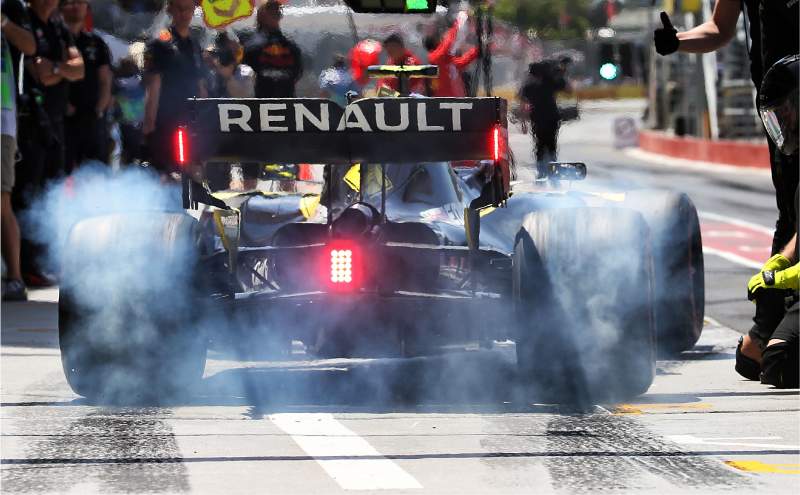
Old tyres are already at the optimal temperature, so their grip will already be at good-enough levels. And if tyre wear is minimal, old tyres will have an initial advantage over fresh tyres (until the fresh tyres get hot enough).
· Tyre heat
The way that fresh tyres become grippy is through heat. The hotter they get, the grippier they are.
Fresh tyres will always perform better than old tyres if both are within their optimal temperature range. But that’s the problem.
Until fresh tyres get hot enough, they’ll be at a disadvantage. Usually, pitted drivers can perform their out laps fast enough and get their tyres hot quickly.
However, the Monaco track is special in that regard. And that’s what helped Gasly overcut Hamilton, with Vettel overcutting both of them.
Overcut Execution: Essential Factors to Consider
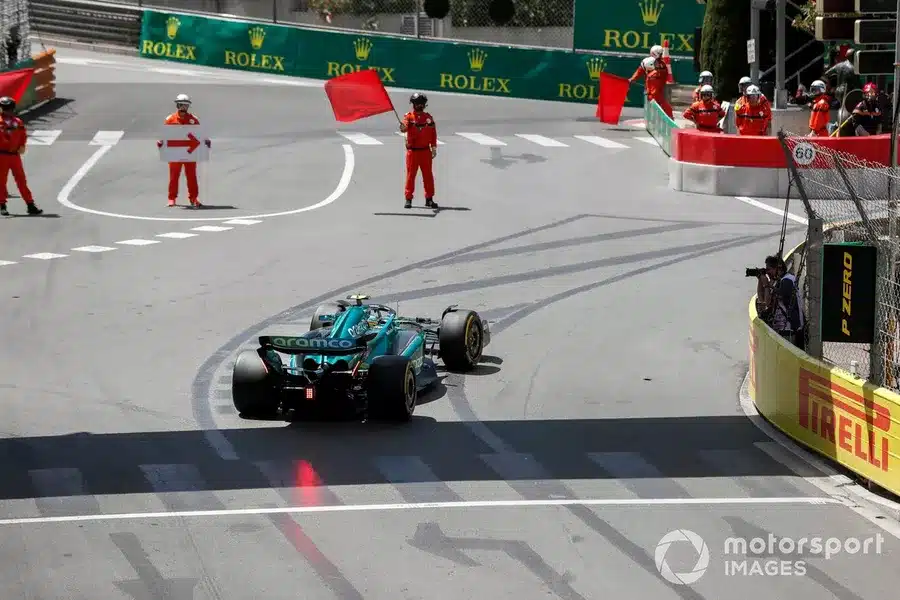
When doing an overcut, there are multiple factors that the driver and his team need to consider. Here’s a summary:
- Preservation of tyre grip over an extended stint
- Late stint pace
- Clean air advantage
- Strategic Timing
- Real-time communication with the team
- Risk assessment
I’ve already talked about many of these points in my guide on undercutting, so be sure to check that one out.
Here’s a more detailed overview about the rest of the factors:
1. Tyre Degradation and Preservation
The most important factor when performing an overcut manoeuvre is the current level of tyre degradation.
If the tyres are too degraded, the overcut manoeuvre is unlikely to work because of low performance on the track and low grip.
However, if the tyres are in relatively good condition, then the next question arises – can the tyres last long enough until the end of the stint and overtake the pitting driver?
They’ll have to try and preserve the tyres as much as possible while also ensuring an overtake over the pitting driver.
2. Late Stint Pace
Another important factor in overcutting is assessing the car’s performance in a prolonged stint. When overcutting, the driver is basically driving beyond the pit stop window, pushing the car further.
The tyres are already old and somewhat worn-out, there’s less fuel in the tank, but the driver benefits from clean air and low-to-zero traffic.
The car’s historical performance for its late-stint pace is also a factor that the driver and the team will assess when overcutting.
3. Real-Time Communication with the Team
Communication between driver and team is essential for pit stop strategies such as overcutting. The team can monitor the rival team’s pit stop window and use any opportune moments to order an overcut manoeuvre.
This way, the driver can time an overcut that coincides with a rival’s pit strategy and make the most of their time in the pit box and slower out lap.
If timed correctly, an overcut will take a rival by surprise, especially if performed exemplary.
Why Is Overcutting Less Common Than Undercutting?
Overcutting has become less popular in recent years compared to undercutting. There are several reasons for this that I’ll explain below.
1. No More Mid-Race Refuelling
Mid-race refuelling was banned by the FIA in 2010 due to several reasons, one of which was safety. You can read more about this here.
Overcutting used to be very effective back when refuelling was allowed because the race cars had less fuel on board during every stint. This made them lighter and faster the more they were on the track.
When a competitor pitted, they would refuel and become heavier, losing some speed in the process.
Whereas the driver still on the track would have less fuel and be faster because of it. So, the overcutting strategy would have a much higher chance of success.
Right now, both cars have similar fuel loads, so the overcutting car will have no weight advantage over the pitted car.
Quite the opposite, the pitted car will have the advantage because of the fresher tyres that will be more grippy once they become hot.
2. Strategic Inflexibility
Compared to the undercut, which is a reactive strategy, the overcut is more of a full-on committal manoeuvre that doesn’t do well when circumstances change.
Let me exemplify with a theoretical example:
- The driver decides to employ the overcut strategy, so he commits to prolonging his stint while the competition pits
- The driver will expect to gain track position because the competition will have colder tyres
- The car suffers an unexpected mechanical failure and is forced to slow down and pit early
- The driver overcutting misses the chance to complete the overcutting manoeuvre, potentially losing even more time
- · The driver is now at a significant disadvantage, which will likely result in a lost track position because of the slower lap times
In this case, the driver engaged in an overcut had no way to react to or foresee the mechanical failure. Other unforeseen events that are problematic for overcutting strategies are collisions, weather changes, unexpected virtual safety car events, or technical issues.
In other words, the overcut is a gamble that may not pay off. On the other hand, the undercut is almost always successful because the fresh tyres are faster than the old tyres.
3. Risk of Traffic
The more a driver stays on the track, the more chances there are to come across traffic that slows them down, especially after doing a pit stop.
So, in effect, the longer the overcutting manoeuvre, the more potentially disadvantageous it is to a driver.
That’s because traffic usually builds up over time, with race cars driving at varying speeds, some drivers will be coming up slowly after their out laps with fresh tyres, and so on.
There could also be collisions or other incidents on the track that lead to more traffic, which ultimately slows down a driver performing an overcut.
And once that happens, the advantage of tyre preservation and overcutting disappears, with the pitted drivers coming up ahead.
Conclusion
Overcutting used to be a really effective pit stop strategy commonly employed by F1 teams. Now, that’s no longer the case, largely because of the ban on refuelling.
But you will still see overcutting tactics used on certain tracks like the Monaco Circuit, where undercutting manoeuvres aren’t as effective.
Formula 1 is much more strategic than it appears at first glance. The more you watch, the more you understand the decisions behind some of the flashiest victories of each season!