How Many F1 Drivers Have Died?
Formula 1 wasn’t always the risk-free sport that we know and love today. When it began in the 1950s, there was at least one driver dying during every season.
By comparison, the last death in F1 was that of Jules Bianchi in 2015, and the one before it was Ayrton Senna in 1994.
First, let me give you a summary of the number of deaths per decade:
- 1950s Deaths – 4
- 1960s Deaths – 8
- 1970s Deaths – 8
- 1980s Deaths – 2
- 1990s Deaths – 2
- 2000s – 0
- 2010s – 1
- 2020s – 0
In total, 25 F1 drivers have died during an official Championship Formula 1 event, either during a race, practice, or qualification sessions since the 1950s until 2023.
If we include active F1 drivers who died during their F1 career but not in Championship F1 races, then the total would be 52, including 27 other drivers.
First Death in F1 – Onofre Marimón
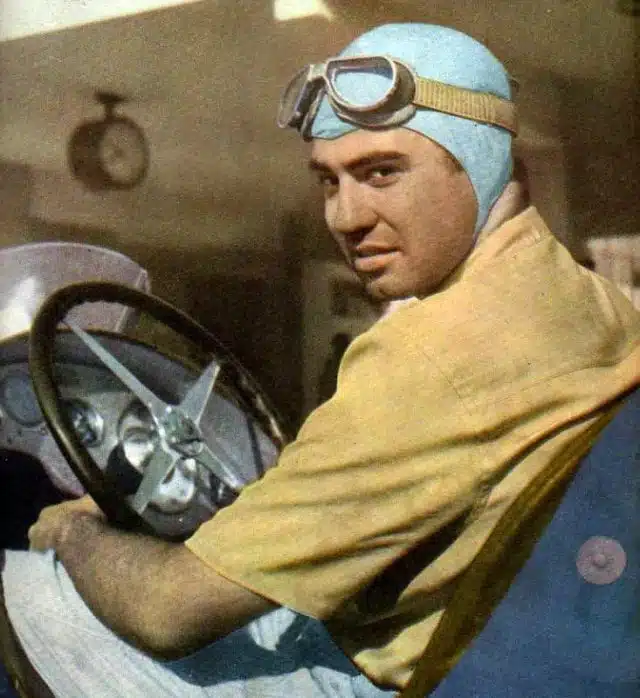
The first driver fatality in an F1 competition took place on July 31st, 1954, when Argentinian driver Onofre Marimón died during a practice session during the German Grand Prix.
He was 30 when the accident happened, making him the first fatality during an F1 World Championship Grand Prix.
He was driving for the Maserati team and, as he left the Nürburgring circuit and reached the Breidscheid curve, he lost control of his car and crashed.
His car slid down a ravine, impacting a tree and rolling over several times, and he was stuck under the car.
Last Death in F1 – Jules Bianchi
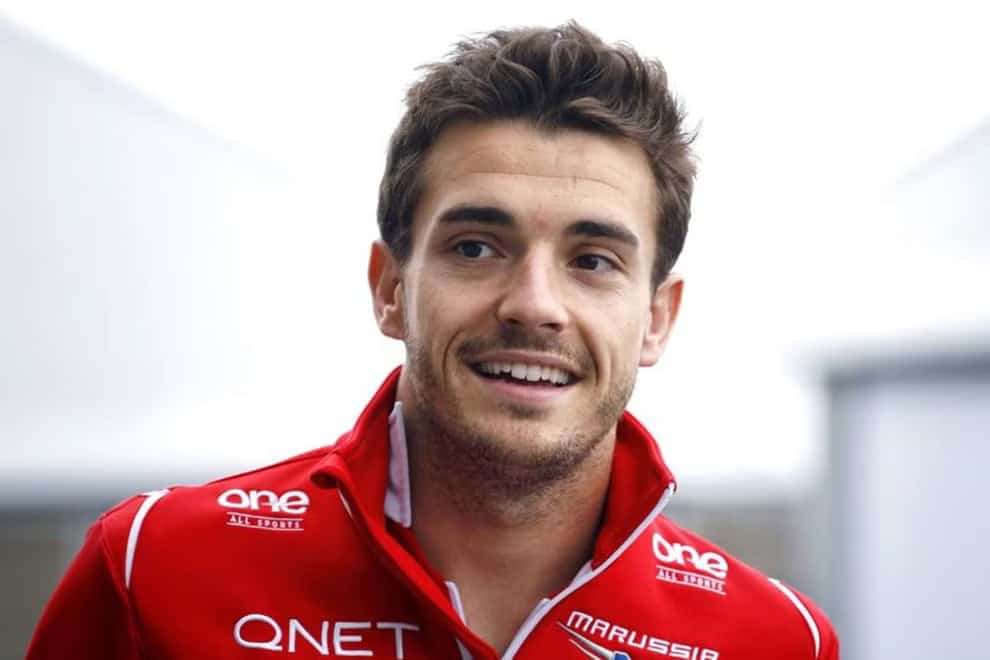
Jules Bianchi’s death on July 17th, 2015, nine months after his crash at the Japanese Grand Prix in 2014, was one of the most unexpected and grim events in the history of Formula 1.
The 25-year-old had just made his debut in Formula one a year earlier with the Marussia team.
At the start of the 2014 season, he scored the first points for the team during the Monaco Grand Prix. Things were looking very good for him.
However, disaster struck on October 5th, 2014, during the Japanese Grand Prix. Bianchi lost control of his Marussia during wet conditions and crashed into a recovery vehicle.
The official diagnosis was diffuse axonal injury, which is among the most common types of brain injuries. He remained in a coma until his untimely demise 9 months later, on July 17th, 2015.
Jules Bianchi’s accident and death were the primary reason for the FIA’s introduction of the Virtual Safety Car system (VSC) for added safety on the track.
They also made changes to the way stricken vehicles are recovered from the track, and in general, Formula 1 became a much safer sport after Bianchi’s death.
In fact, after being involved in a major crash during the 2020 Bahrain Grand Prix, Romain Grosjean credited his safety and survival to the introduction of the Halo safety device that was introduced in response to Bianchi’s fatal crash.
Bianchi’s car number (17) was retired in his honour after the catastrophic event, and many drivers have shown tribute to him throughout the years. One of them is Charles Leclerc, one of the two Ferrari drivers in 2023, who is also Bianchi’s godson.
F1 Deaths by Year
25 F1 drivers have died during official Formula 1 events since the 1950s until 2023. Here’s the list:
1954 – 1 Death
1. Onofre Marimón
- Date: July 31st, 1954
- Age: 30 years old
- Team: Maserati
- Nationality: Argentinian
- Event: Practice session at the German Grand Prix
- Location: The Nürburgring Course
Summary: Marimón died aged 30 on July 31st, 1954, in a practice session with Maserati at the German Grand Prix, on the Nürburgring Course. He lost control of his car, slid down a ravine, and was trapped under his car. He died before he was fully extracted from the car
1958 – 3 Deaths
1. Luigi Musso
- Date: July 6th, 1958
- Age: 33 years old
- Team: Ferrari
- Nationality: Italian
- Event: Official race at the French Grand Prix
- Location: Circuit de Reims-Gueux
Summary: Luigi Musso died aged 33 on July 6th, 1958, during an official race with Ferrari at the French Grand Prix, on the Circuit de Reims-Gueux. His car hurtled off the course, hit a ditch, and somersaulted through the air on the 10th lap of the 50-lap race
2. Peter Collins
- Date: August 3rd, 1958
- Age: 26
- Team: Ferrari
- Nationality: British
- Event: Official Race at the German Grand Prix
- Location: The Nürburgring Course
Summary: Peter Collins died at 26 on August 3rd, 1958, during an official race with Ferrari at the German Grand Prix, on the Nürburgring Course. He went too fast on the Pflanzgarten section, running his Ferrari too wide, and hit a ditch. The car flipped through the air and landed upside down. Collins flew from the car and hit a tree, suffering massive head injuries
3. Stuart Lewis-Evans
- Date: October 19th, 1958
- Age: 28
- Team: Vanwall
- Nationality: British
- Event: Official Race at the Moroccan Grand Prix
- Location: Circuit d’Ain-Diab
Summary: Stuart Lewis-Evans died aged 28 on October 19th, 1958, during an official race with Vanwall at the Moroccan Grand Prix, on the Circuit d’Ain-Diab. The car’s engine seized and sent Evans spiralling fast into the barriers at high speed, bursting into flames once it crashed, killing him on the spot
1960 – 2 Deaths
1. Chris Bristow
- Date: June 19th, 1960
- Age: 22
- Team: Cooper
- Nationality: British
- Event: Official Race at the Belgian Grand Prix
- Location: Circuit de Spa-Francorchamps
Summary: Chris Bristow died aged 22 on June 19th, 1960, during an official race with Cooper at the Belgian Grand Prix, on the Circuit de Spa-Francorchamps. Bristow crashed his car at the Burnenville corner on the 20th lap while trying to maintain his lead against Ferrari’s Willy Mairese
2. Alan Stacey
- Date: June 19th, 1960
- Age: 26
- Team: Lotus
- Nationality: British
- Event: Official Race at the Belgian Grand Prix
- Location: Circuit de Spa-Francorchamps
Summary: Alan Stacey died aged 26 on June 19th, 1960, during an official race with Lotus at the Belgian Grand Prix, on the Circuit de Spa-Francorchamps. A bird hit Stacey in the face on the 25th lap, causing him to crash at 120 mph (190 km/h). The impact with the bird likely broke his neck and he was killed instantly
1961 – 1 Death
1. Wolfgang von Trips
- Date: September 10th, 1961
- Age: 33
- Team: Ferrari
- Nationality: German
- Event: Official race at the Italian Grand Prix
- Location: Autodromo Nazionale di Monza
Summary: Wolfgang von Trips died aged 33 on September 10th, 1961, while driving for Ferrari during an official race at the Italian Grand Prix, on Autodromo Nazionale di Monza. He collided with Jim Clark’s car near the Curva Alboreto. His car flew in the air and crashed into a barrier, sending von Trips flying and killing 15 other spectators
1964 – 1 Death
1. Carel Godin de Beaufort
- Date: August 1st, 1964
- Age: 30
- Team: Porsche
- Nationality: Dutch
- Event: Practice session at the German Grand Prix
- Location: The Nürburgring Course
Summary: Carel Godin de Beaufort died aged 30 on August 1st, 1964, while driving for Porsche during a practice session at the German Grand Prix, on the Nürburgring Course. Beaufort’s car veered off the track in the Bergwerk corner, with him being thrown out and suffering life-threatening injuries to his head, chest, and legs
1966 – 1 Death
1. John Taylor
- Date: August 7th, 1966
- Age: 33
- Team: Brabham
- Nationality: British
- Event: Official race at the German Grand Prix
- Location: The Nürburgring Course
Summary: John Taylor died aged 33 on August 7th, 1966, while driving for Brabham during an official race at the German Grand Prix, on the Nürburgring Course. Taylor’s car collided with Jacky Ickx’s F2 Matra at the start of the race, and while he escaped from the wreckage with severe burns, he succumbed to his wounds four weeks later
1967 – 1 Death
1. Lorenzo Bandini
- Date: May 7th, 1967
- Age: 31
- Team: Ferrari
- Nationality: Italian
- Event: Official race at the Monaco Grand Prix
- Location: Circuit de Monaco
Summary: Lorenzo Bandini died aged 31 on May 7th, 1967, while driving for Ferrari during an official race at the Monaco Grand Prix, on the Circuit de Monaco. Bandini lost control of the car at the harbour chicane, leading to a chaotic skid on the track. The car crashed into a light pole and overturned, rupturing the fuel tank and igniting the fuel. Bandini remained under the car and when he was recovered by the marshals, he had sustained third-degree burns on more than 70% of his body, ten chest fractures, and a chest wound
1968 – 1 Death
1. Jo Schlesser
- Date: July 7th, 1968
- Age: 40
- Team: Honda Racing
- Nationality: French
- Event: Official race at the French Grand Prix
- Location: Circuit de Rouen-les-Essarts
Summary: Jo Schlesser died aged 40 on July 7th, 1968, while driving for Honda Racing during an official race at the French Grand Prix, on the Circuit de Rouen-les-Essarts. Schlesser’s car slid on the Six Frères corner and crashed into a bank, turning sideways. The fuel ignited immediately and took Schlesser’s life on the spot. John Surtees, Honda’s works driver, had previously said that the car was not ready for racing since it used an experimental air-cooled system that Honda had been working on
1969 – 1 Death
1. Gerhard Mitter
- Date: August 1st, 1969
- Age: 33
- Team: BMW
- Nationality: German
- Event: Practice session at the German Grand Prix
- Location: The Nürburgring Course
Summary: Gerhard Mitter died aged 33 on August 1st, 1969, while driving for BMW during a practice session at the German Grand Prix, on the Nürburgring Course. Either a suspension or steering failure caused Mitter to crash and die during a practice session, which led to the BMW team retiring from the race
1970 – 2 Deaths
1. Piers Courage
- Date: June 21st, 1970
- Age: 28
- Team: De Tomaso
- Nationality: British
- Event: Official race at the Dutch Grand Prix
- Location: Circuit Park Zandvoort
Summary: Piers Courage died aged 28 on June 21st, 1970, while driving for De Tomaso during an official race at the Dutch Grand Prix, on the Circuit Park Zandvoort. Courage’s car’s steering or front suspension broke, leading the car up an embankment, disintegrating, and sending the engine flying, which also burst into flames. One of the wheels broke off and hit the driver’s head, potentially breaking his neck or causing severe head injuries, resulting in instant death
2. Jochen Rindt
- Date: September 5th, 1970
- Age: 28
- Team: Lotus
- Nationality: Austrian
- Event: Qualifying session at the Italian Grand Prix
- Location: Autodromo Nazionale di Monza
Summary: Jochen Rindt died aged 28 on September 5th, 1970, while driving for Lotus during a qualifying session at the Italian Grand Prix, on Autodromo Nazionale di Monza. Rindt’s car crashed while approaching the Parabolica corner, hitting a stanchion head-on. Rindt slid under the seatbelts (he was only using four points instead of all five on the harness) and one of the belts slit open his throat, causing his death. Later, it was discovered that his car’s right front inboard brake shaft had suffered a failure, which initiated the accident. The poorly-installed crash barriers also contributed to his death
1973 – 2 Deaths
1. Roger Williamson
- Date: July 29th, 1973
- Age: 25
- Team: March Engineering
- Nationality: British
- Event: Official race at the Dutch Grand Prix
- Location: Circuit Park Zandvoort
Summary: Roger Williamson died aged 25 on July 29th, 1973, while driving for March Engineering during an official race at the Dutch Grand Prix, on Circuit Park Zandvoort. Williamson’s tyre failure flipped his car upside down and burst into fire. Even though fellow racer David Purley tried to turn the car over and extinguish the fire, by the time the fire was out, Williamson had died due to asphyxiation. Following this accident, the FIA made fire-resistant clothing mandatory to all trackside marshals
2. François Cevert
- Date: October 6th, 1973
- Age: 29
- Team: Tyrrell Racing Organisation
- Nationality: French
- Event: Qualifying session at the United States Grand Prix
- Location: Watkins Glen International
Summary: François Cevert died aged 29 on October 6th, 1973, while driving for Tyrrell Racing Organisation during a qualifying session at the US Grand Prix, on Watkins Glen International. Cevert’s car bumped on the kerbs due to being too far on the left side of the track. This resulted in a swerve toward the right side of the track, where the car touched the blue safety barriers, spinning and crashing into the barriers on the other side of the track. The impact with the barriers cut his body in half, and Cevert died instantly
1974 – 1 Death
1. Helmuth Koinigg
- Date: October 6th, 1974
- Age: 25
- Team: Surtees
- Nationality: Austrian
- Event: Official race at the United States Grand Prix
- Location: Watkins Glen International
Summary: Helmuth Koinigg died aged 25 on October 6th, 1974, while driving for Surtees during an official race at the US Grand Prix, on Watkins Glen International. Koinigg experienced suspension failure at turn 7, which sent the car straight into the Armco barrier. Since the barrier was insecurely installed, the car passed underneath the bottom portion, decapitating Koinigg and resulting in instant death
1975 – 1 Death
1. Mark Donohue
- Date: August 17th, 1975
- Age: 38
- Team: March
- Nationality: American
- Event: Practice session at the Austrian Grand Prix
- Location: Österreichring
Summary: Mark Donohue died aged 38 on August 17th, 1975, while driving for March during a practice session at the Austrian Grand Prix, on the Österreichring track. Donohue lost control of the car after a tyre failure, which sent him into the catch fencing in the Vöest Hügel Kurve. The debris from the crash killed a track marshal, though Donohue was not significantly injured at this point. However, he had likely hit his head on a catch fencing post or on an advertising billboard. His initial headache turned out to be a cerebral haemorrhage, which resulted in his death
1977 – 1 Death
1. Tom Pryce
- Date: March 5th, 1977
- Age: 27
- Team: Shadow
- Nationality: British
- Event: Official Race at the South African Grand Prix
- Location: Kyalami Racing Circuit
Summary: Tom Pryce died aged 27 on March 5th, 1977, while driving for Shadow during an official race at the South African Grand Prix, on the Kyalami Racing Circuit. Pryce hit a 19-year-old marshal who was crossing the track without prior permission to help racer Renzo Zorzi whose car had caught fire. The marshal was thrown in the air by the impact and death ensued immediately, and his fire extinguisher smashed into Pryce’s head, resulting in instantaneous death. His car continued at high speed, veered to the right, hit an entrance for the emergency vehicles, and then skid back onto the track, hitting Jacques Laffite’s car
1978 – 1 Death
1. Ronnie Peterson
- Date: September 10th, 1978
- Age: 34
- Team: Lotus
- Nationality: Swedish
- Event: Official race at the Italian Grand Prix
- Location: Autodromo Nazionale di Monza
Summary: Ronnie Peterson died aged 34 on September 10th, 1978, while driving for Lotus during an official race at the Italian Grand Prix, on Autodromo Nazionale di Monza. James Hunt’s car collided with Peterson’s car and 8 other cars on the track. Peterson remained trapped in the burning car until other racers managed to free him, at which point he was outside of danger. He had severe leg injuries, though, which the doctors identified as 27 fractures. However, during the night at the hospital, he was diagnosed with fat embolism and by the next day, he was in kidney failure and eventually died on September 11th
1982 – 2 Deaths
1. Gilles Villeneuve
- Date: May 8th, 1982
- Age: 32
- Team: Ferrari
- Nationality: Canadian
- Event: Qualifying session at the Belgian Grand Prix
- Location: Circuit Zolder
Summary: Gilles Villeneuve died aged 32 on May 8th, 1982, while driving for Ferrari during a qualifying session at the Belgian Grand Prix, on Circuit Zolder. Villeneuve mistakenly swerved into Jochen Mass’ car after coming from the first chicane and not expecting Mass to be driving so slowly. Mass moved to the right to let Villeneuve pass him but the latter made the exact same decision in that instant. The result was a massive crash which catapulted the car over 330ft in the air, nosediving in the ground. Villeneuve was thrown more than 160ft from the wreckage into the catch fencing. At the hospital, the doctors discovered a fatal neck fracture
2. Riccardo Paletti
- Date: June 13th, 1982
- Age: 23
- Team: Osella
- Nationality: Italian
- Event: Official race at the Canadian Grand Prix
- Location: Circuit Gilles Villeneuve
Summary: Riccardo Paletti died aged 23 on June 13th, 1982, while driving for Osella during an official race at the Canadian Grand Prix, on Circuit Gilles Villeneuve. Paletti hit the stationary car of driver Didier Pironi who’d stalled his engine at the start of the Canadian Grand Prix. He suffered severe chest injuries and had no pulse by the time the rescue workers managed to get him out of the car
1994 – 2 Deaths
1. Roland Ratzenberger
- Date: April 30th, 1994
- Age: 33
- Team: Simtek
- Nationality: Austrian
- Event: Qualifying session at the San Marino Grand Prix
- Location: Autodromo Enzo e Dino Ferrari
Summary: Roland Ratzenberger died aged 33 on April 30th, 1994, while driving for Simtek during a qualifying session at the San Marino Grand Prix, on Autodromo Enzo e Dino Ferrari. Ratzenberger initially went off the track during the Acque Minerali chicane and damaged his front wing. Despite this, he decided to keep going but when at the high-downforce Villeneuve corner, the front wing broke and became stuck under the car. His car then crashed in the outside wall at 195.7 mph (314.9 km/h). Ratzenberger’s crash had the highest g-force (500g) of any crash in the history of Formula 1.
2. Ayrton Senna
- Date: April 30th, 1994
- Age: 33
- Team: Williams
- Nationality: Brazilian
- Event: Official race at the San Marino Grand Prix
- Location: Autodromo Enzo e Dino Ferrari
Summary: Ayrton Senna died aged 33 on April 30th, 1994, while driving for Williams during an official race at the San Marino Grand Prix, on Autodromo Enzo e Dino Ferrari. After making the Tamburello corner on the 7th lap, Senna’s car left the track at 191 mph (307 km/h) and hit a concrete retaining wall at 145 mph (233 km/h) after Senna braked for around 2 seconds. He was immediately extracted from the car and the resident doctor, Watkins, performed an on-site tracheotomy. Senna was transported to the hospital but succumbed to his wounds not long after. He had sustained three life-threatening injuries at the time of the accident
2014/2015 – 1 Death
1. Jules Bianchi
- Date: Crashed on October 5th, 2014, but died on July 17th, 2015
- Age: 25
- Team: Marussia
- Nationality: French
- Event: Official race at the Japanese Grand Prix
- Location: Suzuka International Racing Course
Summary: Jules Bianchi died aged 25 on July 17th, 2015, 9 months after the 2014 crash. He was driving for Marussia during an official race at the Japanese Grand Prix, on the Suzuka International Racing Course. Bianchi lost control of the car, veered to the run-off area outside of the Dunlop Curve, and collided with a wheel loader that was removing the debris from Adrian Sutil’s Sauber after the latter had crashed. The racing car suffered substantial damage during the impact, as the roll bar went under the wheel loader. Bianchi was hospitalised for nine months, during which he was in a coma and sustained by a medical ventilator. He eventually succumbed to his wounds on July 17th, 2015
F1 Deaths by Nationality
Let’s see how many F1 drivers died per country:
| Nationality | Total Driver Deaths | Year(s) |
| British | 8 | Peter Collins (1958), Stuart Lewis-Evans (1958), Chris Bristow (1960), Alan Stacey (1960), John Taylor (1966), Piers Courage (1970), Roger Williamson (1973), Tom Pryce (1977) |
| Italian | 3 | Luigi Musso (1958), Lorenzo Bandini (1967), Riccardo Paletti (1982) |
| French | 3 | Jo Schlesser (1968), François Cevert (1973), Jule Bianchi (2014) |
| Austrian | 3 | Jochen Rindt (1970), Helmuth Koinigg (1974), Roland Ratzenberger (1994) |
| German | 2 | Wolfgang von Trips (1961), Gerhard Mitter (1969) |
| American | 1 | Mark Donohue (1975) |
| Dutch | 1 | Carel Godin de Beaufort (1964) |
| Argentinian | 1 | Onofre Marimón (1964) |
| Brazilian | 1 | Ayrton Senna (1994) |
| Canadian | 1 | Gilles Villeneuve (1982) |
| Swedish | 1 | Ronnie Peterson (1978) |
The UK had the most F1 driver deaths (8), showcasing the country’s strong presence in Formula 1.
Italy, France, and Austria are in second place, each with 3 driver deaths over the years, while Germany sits in third place with only 2 driver deaths.
Even if we include non-F1 driver deaths and drivers who died during test sessions, the UK would still be at the top with 14 deaths.
But the US would jump to second place with 10 driver deaths, as most US drivers would participate in the Indianapolis 500 back then.
F1 Deaths by Circuit
Now let’s take a look at all F1 driver deaths by circuit:
| Circuit | Total Driver Deaths | Year(s) |
| Nürburgring | 5 | Onofre Marimón (1954), Peter Collins (1958), Carel Godin de Beaufort (1964), John Taylor (1966), Gerhard Mitter (1969) |
| Autodromo Nazionale di Monza | 3 | Wolfgang von Trips (1961), Jochen Rindt (1970), Ronnie Peterson (1978) |
| Circuit Park Zandvoort | 2 | Piers Courage (1970), Roger Williamson (1973) |
| Circuit de Spa-Francorchamps | 2 | Chris Bristow (1960), Alan Stacey (1960) |
| Watkins Glen International | 2 | François Cevert (1973(, Helmuth Koinigg (1974) |
| Autodromo Enzo e Dino Ferrari | 2 | Roland Ratzenberger (1944), Ayrton Senna (1944) |
| Kyalami Racing Circuit | 1 | Tom Pryce (1977) |
| Circuit de Reims-Gueux | 1 | Luigi Musso (1958) |
| Circuit d’Ain-Diab | 1 | Stuart Lewis-Evans (1958) |
| Circuit de Monaco | 1 | Lorenzo Bandini (1967) |
| Circuit de Rouen-les-Essarts | 1 | Jo Schlesser (1968) |
| Österreichring | 1 | Mark Donohue (1975) |
| Circuit Zolder | 1 | Gilles Villeneuve (1982) |
| Circuit Gilles Villeneuve | 1 | Riccardo Paletti (1982) |
| Suzuka International Racing Course | 1 | Jules Bianchi (2014) |
The most F1 drivers died on the Nürburgring circuit in Germany (5 deaths), during the German Grand Prix, with the second most-deadly being Autodromo Nazionale di Monda with 3 deaths.
The Nürburgring circuit is known for its dangerous elevation changes, the lack of runoff areas, as well as the blind corners.
In fact, it’s widely recognized as the most dangerous F1 circuit in history, with the most driver deaths by far.
F1 Deaths by Type of Event
It’s worth looking into the types of events that killed the most F1 drivers, too. Let’s see:
World Championship Events (races, practice, and qualifying) – 25 deaths (16 in races, 4 in practice, and 5 in qualifying)
Test Drives – 7 deaths
Indianapolis 500 – 7 deaths
Non-Championship events – 13
Total – 52
By far, the most drivers died while participating in an FIA World Championship event, including official races, practice sessions, and qualifying sessions.
Most Famous Deaths in Formula 1
Formula 1 was a fairly dangerous sport in its first decades but its most famous deaths took place toward the turn of the century, a period with much lower driver fatality rates.
As such, we need to talk about Gilles Villeneuve, Roland Ratzenberger, and Ayrton Senna. Few names are as striking as these three in F1.
Their deaths were completely unexpected and tragic, and the circumstances of their accidents were also very controversial.
Let’s go over each one and see what made their deaths significant for F1 history.
1. Gilles Villeneuve – Died at the 1982 Belgian Grand Prix
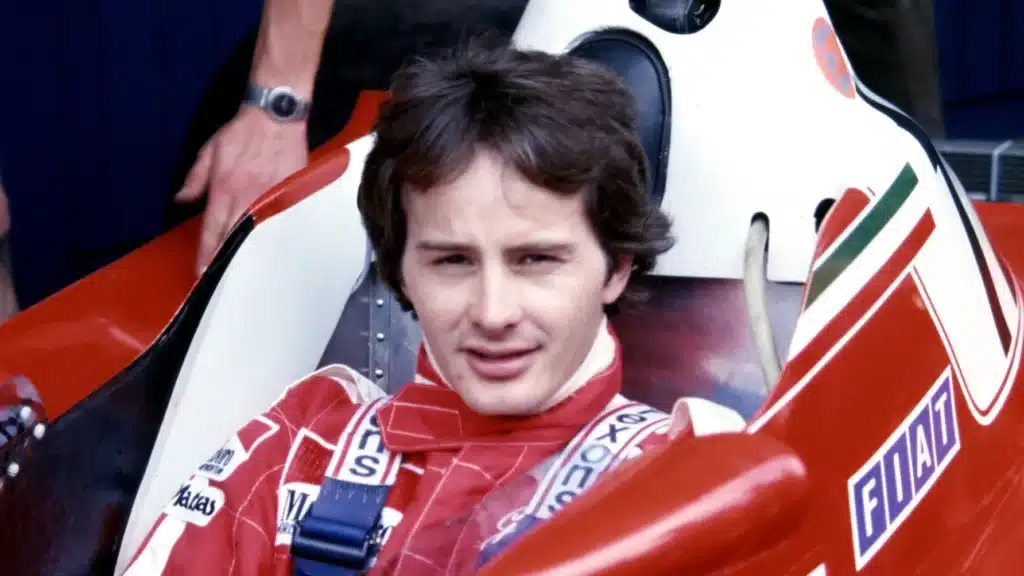
Gilles Villeneuve was one of the most iconic figures in the history of Formula 1 at the time of his death, during the 1982 Belgian Grand Prix at Zolder.
He had won 6 Grands Prix throughout a very short Formula 1 career (6-year career) and stunned the public with his high-level performance.
He drove for McLaren during the 1977 season and then moved to Ferrari for the 1978-1982 seasons.
Gilles is also known for being the father of the 1997 World Drivers’ Champion, Jacques Villeneuve, who had become the only Canadian to win a Formula One World Championship.
His death came abruptly during the 1982 Belgian Grand Prix at Zolder, during the final qualifying session. Villeneuve was using his final set of tyres and was trying to improve his final lap time after Pironi had come one tenth of a second faster than him for sixth place.
Villeneuve was just coming from the first chicane at Zolder and met with Jochen Mass, who was driving a lot slower through the Butte bend.
When he saw Villeneuve come at high speed, Mass veered right to let his fellow driver pass him by. However, Villeneuve made that exact same decision at the same time as Mass.
The Ferrari hit Mass’ car at 120mph (200 km/h) and flew in the air for approximately 330ft (100m) before falling nose-down and breaking apart.
Villeneuve was thrown outside the car for approximately 160 ft (50m) and hit the catch fencing. He had lost his helmet during the crash, which further worsened his fall.
When the doctor arrived, Villeneuve was already without a pulse and, even though he was intubated and ventilated, he had a fatal neck fracture. He remained on life support until his death on the same day, at 21:12 in the evening.
A thorough investigation into the accident showed that it was Villeneuve’s error that made him crash into Mass, so the latter was found not guilty.
The corner where Villeneuve died has since been turned into a chicane and now bears his name. Another corner at the Autodromo Enzo e Dino Ferrari is named after him, with a Canadian flag painted on the third slot of the start grid.
His legacy survives even today, with multiple Canadian drivers bearing Villeneuve’s number 27 during their careers.
2. Roland Ratzenberger – Died at the 1994 San Marino Grand Prix
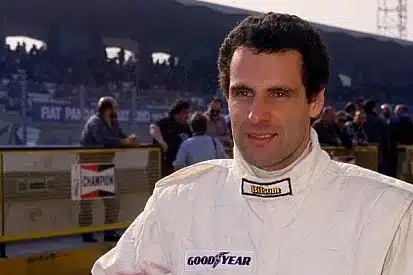
Roland Ratzenberger’s death was particularly tragic since he had just secured an F1 seat for the 1994 season with the newly-formed Simtek team.
He was also 33 years-old, an unusual age for someone to join Formula 1. All in all, he participated in 3 Grands Prix and died during the 1994 San Marino Grand Prix, in a qualifying session.
His death is often overshadowed by that of his more accomplished peer, Ayrton Senna, who died the next day, on race day.
During the second qualifying session of the San Marino Grand Prix at Imola, Ratzenberger went off the track on the Acque Minerali chicane and unknowingly damaged his front wing.
His sponsor was attending for the first time, and he didn’t want to disappoint, so he didn’t check his vehicle accordingly, missing the damaged front wing.
This became his downfall during the Tosa hairpin, at the high-downforce Villeneuve corner, when the front wing broke and became stuck under the car.
As a result, Ratzenberger crashed into the wall at 195.7 mph (314.9 km/h) at approximately 500g, which remains the highest g-force in any Formula 1 crash.
He was pronounced dead after arriving at the Maggiore Hospital in Bologna, unfortunately. The three fatal injuries he had sustained (basilar skull fracture, blunt trauma, and ruptured aorta) proved too much for him.
Ratzenberger was the first F1 driver to die during a race since Riccardo Paletti during the 1982 Canadian Grand Prix 12 years previously.
His close friend, Ayrton Senna, rushed to the medical centre to check on Ratzenberger but Sid Watkins, F1’s head doctor and Senna’s friend, informed him of Ratzenberger’s death.
The Simtek team was in a state of shock when Bernie Ecclestone brought the news that Ratzenberger had died. They did decide to compete on Sunday, despite the tragic news.
Ratzenberger’s spot in the starting grid was offered to Paul Bermondo but he refused it out of respect.
Following Ratzenberger’s death, the FIA introduced the HANS device in 2003, which was specifically designed to prevent basilar skull fractures during crashes.
In fact, following his and Senna’s death on the following day, the FIA introduced a host of new safety regulations, including the plank or skid block.
3. Ayrton Senna - Died at the 1994 San Marino Grand Prix
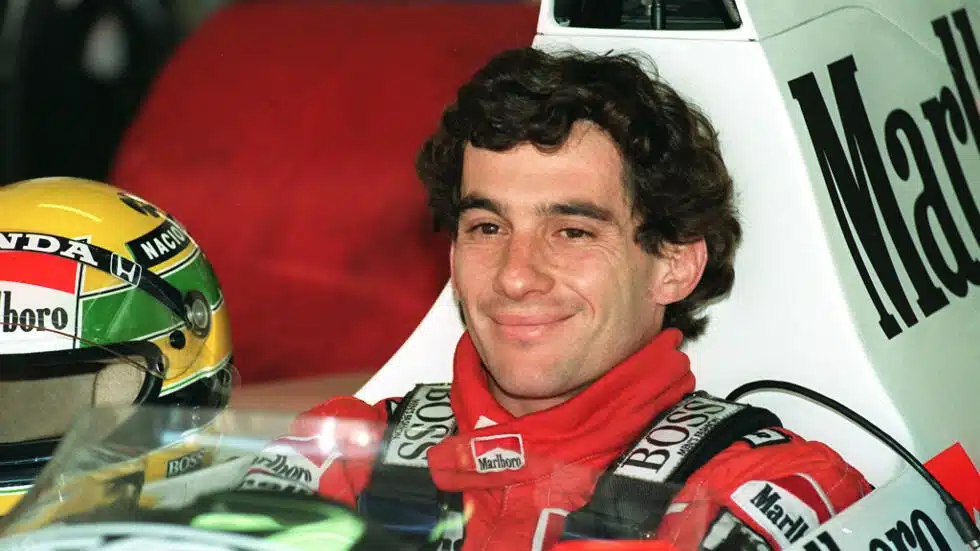
Ayrton Senna was a 3-times World Champion after winning the 1988, 1990, and 1991 F1 Championships. He had been an F1 driver for 10 years, between 1984 and 1994.
With 41 Grands Prix won and 80 podiums, Senna is still the 6th most successful driver of all time in terms of race wins.
That’s why his death was an absolute tragedy to both the community and industry as a whole.
During the Saturday qualifying session for the San Marin Grand Prix, Senna’s friend, Roland Ratzenberger, died after his front wing broke and became lodged under his car.
He spun out of control and flew at 190 mph (310 km/h) in a concrete wall, killing him almost instantly.
Senna was tearful when he met with FIA Medical Chief Professor who told him to quit Formula 1 and take up fishing.
However, Senna replied that he would not quit so easily. And he went on to spend the better part of his Sunday morning talking to Alain Prost, his former rival, about the re-establishment of the Grand Prix Drivers’ Association.
Senna wanted to improve the overall safety of Formula 1 and reduce the mortality of F1 drivers further.
But he wouldn’t have a chance to do that, as that Sunday’s Grand Prix would be his last. During the high-speed Tamburello corner, on his 7th lap, Senna hit a concrete wall at 145 mph (233 km/h) after running off the track in a straight line.
Later telemetry assessments showed that he had applied the brakes for 2 seconds but that wasn’t enough to avoid the crash.
Following the crash, Senna had a ruptured temporal artery and lost 90% of his blood, several fatal skull fractures, and multiple brain injuries. Watkins also had to do an on-site tracheotomy due to the severe neurological condition.
After being transferred to Bologna’s Maggiore Hospital, the head of the emergency department, Maria Teresa Fiandri, announced his death at 18:40 in the evening.
Later on, the medical team stated that they had found a furled Austrian flag in Senna’s car. He had wanted to raise the flag in Ratzenberger’s honour after the race.
To date, Senna’s death remains one of the most regrettable in the sport, especially with how he was advised to retire from F1 immediately after Ratzenberger’s death.
Senna’s death is the main reason why the FIA introduced the plank regulation back into the sport, along with several other safety regulations. This seems a fitting legacy for the man who wanted to make Formula 1 safer.
Most Bizarre Deaths in Formula 1
Just as we’ve seen the most famous (and tragic) deaths in Formula 1, the sport’s history also has particularly bizarre and unfair fatal accidents.
Let’s go over some of them below:
1. Alan Stacey – Died at the 1960 Belgian Grand Prix
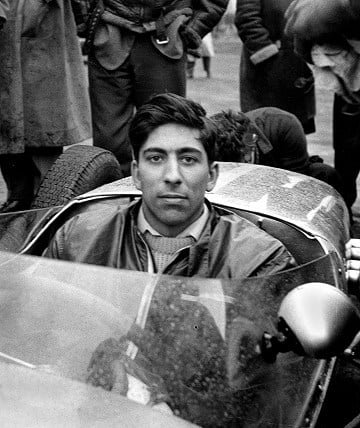
Alan Stacey died during the 1960 Belgian Grand Prix when a bird hit him in the face on lap 25. He crashed while at 120 mph (190 km/h) after going off the road and climbing on an embankment.
His car penetrated into the thick hedges and then fell into a field. Stacey died a few minutes after Chris Bristow.
It’s believed that the bird either knocked him unconscious or broke his neck during the impact, making his death one of the most bizarre accidents in the history of Formula 1.
Fortunately, such accidents can’t happen anymore because F1 cars are safer and more secure, with drivers benefitting from a wide number of safety elements.
2. Jochen Rindt – Died at the 1970 Italian Grand Prix
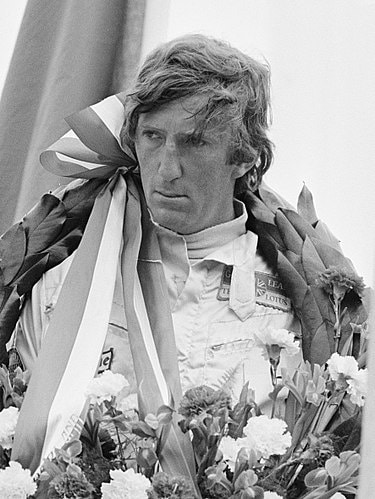
Jochen Rindt crashed at the Italian Grand Prix in 1970 when approaching the Parabolica corner at Monza.
When Rindt’s car impacted the barrier, the suspension went under it and then hit a stanchion. The front of the car was destroyed completely, as a result.
Rindt was not wearing crotch straps and was only wearing four points on the five-point harness. At the moment of impact, he slid under the harness and the belts slit his throat, killing him on the spot.
He was only wearing four points on the harness because, if a fire would break out, he would have time to exit the car.
As it turns out, this proved to be a fatal mistake. However, the official cause of death was the poorly installed crash barrier and a failure of his car’s front inboard brake shaft.
3. François Cevert – Died at the 1973 United States Grand Prix
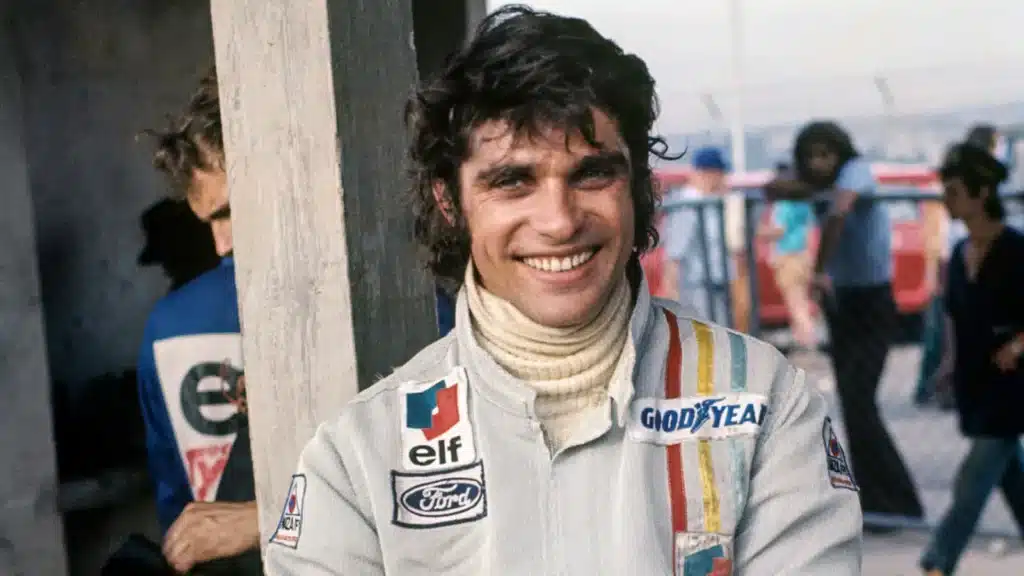
François Cevert died during the 1973 United States Grand Prix when he was cut in half between his neck and hip after a crash.
At “The Esses” (a right-left uphill at the Watkins Glen track), his car was a bit too far on the left side of the track, which made him hit a kerb.
His car veered fast toward the right, touching the power blue safety barriers, which made it spin and crash into the opposite barriers.
The crash lifted up the barriers, which cut Cevert’s body in half, killing him instantly. The cause of death, apparently, was Cevert choosing to go through The Esses in third gear with more power, which made his car less tractable and more “nervous”.
4. Helmuth Koinigg – Died at the 1974 United States Grand Prix
Helmuth Koinigg died at the 1974 US Grand Prix when his car suffered a suspension failure during turn 7. His car struck the Armco barrier head on and the bottom portion lifted up and decapitated Koinigg.
He hadn’t been driving fast, so this accident should have resulted in no injuries. However, the barrier was insecurely installed, which was a generalised problem with most circuits.
Koinigg’s death was eerily similar with that of François Cevert a year previously, which had also happened on the same race track.
His death is particularly tragic as it was his first Formula 1 season as an official driver. The US Grand Prix would have been his second entry.
5. Mark Donohue – Died at the 1975 Austrian Grand Prix
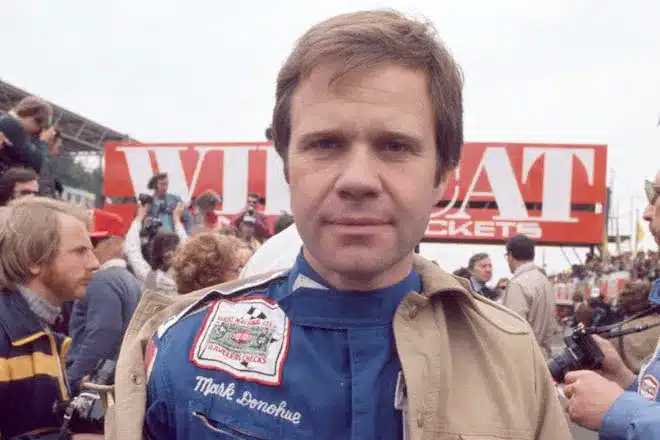
Mark Donohue died during a practice session at the 1975 Austrian Grand Prix. He lost control of his car (the March 751) after a tyre failed and was thrown into the catch fencing.
This took place at the Vöest Hügel Kurve, which is still the fastest corner of the Österreichring track even today.
The crash sent debris flying that killed a track marshal but Donohue seemed to be relatively uninjured.
He did have a headache, however, which prompted him to go to the hospital the next day. That’s when he went into a coma and died from a cerebral haemorrhage.
It’s believed that, during the crash, he hit his head on a catch fencing post or the bottom of an advertising billboard, and this led to cerebral haemorrhaging.
6. Tom Pryce – Died at the 1977 South African Grand Prix
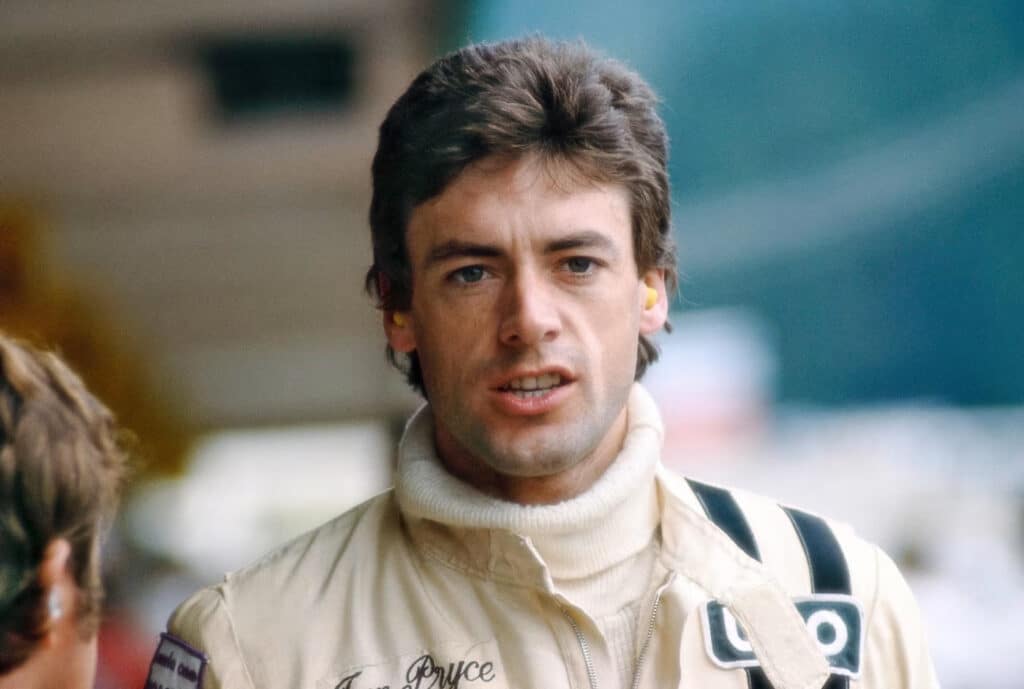
Tom Pryce’s death is one of the most bizarre on this list. He died during the 1977 South African Grand Prix at Kyalami, after setting the fastest time on a practice session.
During the Sunday race, driver Renzo Zorzi had to stop on lap 22 as his Formula one car caught on fire due to a malfunctioning fuel metering unit.
Two marshals on the opposite side of the track intervened (without waiting for confirmation to traverse the track) and attempted to cross over.
While the first marshal made it across the track, the second one did not. He was hit by Tom Pryce at 170 mph (270 km/h) because of no visibility. Pryce was behind Hans-Joachim Stuck’s car and could not see the marshal.
The marshal died instantly as he was thrown into the air but the fire extinguisher he was carrying smashed into Pryce’s head.
The impact was so strong that it likely killed Pryce instantly, wrenching his helmet in a sharp upward motion.
With a dead driver at the wheel, his car sped down the track, scraped the metal barriers, hit an entrance for emergency vehicles, and then hit Jacques Laffite’s car, sending both cars into the barriers.
This freak accident shocked everyone due to how unexpected and bizarre the chain of events was.
The race winner, Niki Lauda, said on the podium that “there was no joy after that” when he was informed about Pryce’s death.
To Wrap Up…
Formula 1 has a gruesome history, and fatal accidents were not uncommon in its beginning years. Unfortunately, it took way too many deaths for the sport to become safer and for the FIA to introduce new safety regulations.
We can take some comfort in the fact that no other driver has died since Jules Bianchi’s crash in 2014. It’s been over 9 years since that fateful event, and we hope nothing like that ever happens again.
So far, 25 drivers have died during official F1 events (races, practice, and qualification sessions). Another 27 have died at either Indy 500, test drives, or non-Championship events.
That’s 52 too many deaths but lessons have been learned and the sport is now significantly safer.