What is a Works Team in F1?
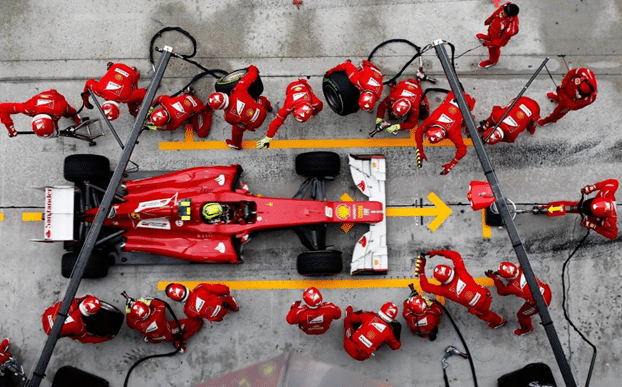
In Formula 1, a “Works team” is a team owned by a manufacturer that builds both the engine and car in-house, as opposed to a “Customer team” that only builds the car in-house and buys their engine from another manufacturer. A notable example of this is Ferrari which designs and builds their F1 car and engine for its own team, Scuderia Ferrari.
The term “Works team” is often used interchangeably with “Factory team”. Some F1 fans might disagree with this but the two terms refer to the same thing in practice. The difference might be more semantic than practical.
Works teams are an important aspect of Formula 1, as they’ve been around since the 1950s and have defined the sport in more ways than one.
Let’s go into more details on F1 Works teams below so you can understand them better!
Characteristics of a Works Team
An F1 Works team has a few notable characteristics that defines its role in the competition:
1. Direct Affiliation
First of all, a Works team is directly affiliated with an automotive company and both operate as one entity, so to speak.
Take Ferrari, for instance. Its F1 team, Scuderia Ferrari, is owned and managed by the Ferrari automobile company. In a way, Scuderia Ferrari is the Formula 1 division of the Ferrari automobile company.
The team’s F1 cars are designed and manufactured in-house through their own manufacturing division. Everything from the engine to the chassis is built by them.
This goes beyond simple sponsorship. The Works team and the manufacturer are closely integrated and share the same identity and goals.
The Works team will also have the same branding and livery as the manufacturer. The visual representation will identify both as being the same entity.
2. Technical & Financial Support
Another characteristic of a Works team is technical and financial support from the manufacturer without the need for a contract.
The Works team will also receive the manufacturer’s assistance in automobile engineering and design during the competition.
This includes exclusive access to any new technologies that the manufacturer has been working on, proprietary simulation tools, and state-of-the-art R&D technologies.
In other words, anything that the automobile company/manufacturer can use to support the Works team, they will use.
A Works team also received customised power units (engines) that are devised specifically for their chassis. Every aspect of an F1 car is optimised as per the team’s requirements in a Works agreement.
Financial-wise, Works teams have significantly larger budgets compared to customer teams. Their manufacturer allocates a sizable portion of their motorsport budget to the F1 team.
This includes funds for research, development, hiring personnel, and any other expenses.
3. Resource Sharing
A Works team and its manufacturer will share resources seamlessly without the need for formal contracts.
This means a free exchange of :
- Personnel – engineers, designers, or other technical experts sourced from the manufacturer
- Infrastructure – advanced simulation tools, wind tunnel testing facilities, and various other resources that could optimise the team
- Technology – innovative technologies that the manufacturer pioneers can be seamlessly integrated into the F1 car due to the Works agreement
Since the F1 Works team is an extension of the manufacturer, all the profits made by the former will be shared with the latter, too.
It’s in the manufacturer’s best interest to cooperate fully with the F1 Works team and integrate their resources seamlessly.
F1 Works Teams in 2023
There are only four Works teams in the 2023 Formula 1 season – Ferrari, Mercedes, Red Bull, and Alpine (Renault).
Let’s explore each one a bit:
1. Ferrari

Officially known as Scuderia Ferrari, this is the Formula 1 Works team of the automobile company Ferrari.
They’ve participated in Formula 1 since the 1950 Monaco Grand Prix and most importantly, Ferrari has always manufactured its racing cars. They’ve never been a customer team, only a Works team, and quite a successful one at that.
Over the years, Ferrari has been the engine supplier of several other teams, including:
- Minardi (1991)
- Scuderia Italia (1992-1993)
- Sauber (1997-2005 and 2010-2025)
- Prost (2001)
- Red Bull Racing (2006)
- Spyker (2007)
- Scuderia Toro Rosso (2007-2013, 2016)
- Force India (2008)
- Marussia (2014-2015)
- Haas F1 Team (2023)
As an F1 team and constructor, Ferrari has won 16 World Drivers’ Championships and 15 World Drivers’ Championships.
2. Mercedes
Officially known as Mercedes-AMG Petronas F1 team, this is the F1 Works team of automobile brand Mercedes-Benz.
They’ve also always supplied the power unit (engine) for their F1 team, similar to Ferrari. This makes them a traditional Works team, if you will.
Mercedes first participated in F1 during the 1954 and 1955 seasons but the 1955 disaster made them withdraw from Formula 1 both as a competitor and constructor.
Mercedes returned as a constructor in 1994 and has been the engine supplier of multiple teams, including Sauber, McLaren, Brawn GP (which would become Mercedes’ Works Team), Force India, Williams, Lotus F1 Team, and Manor.
In 2010, Mercedes bought the Brawn GP team, rebranded it to Mercedes, and went on to win 9 World Drivers’ Championships and 8 Constructors’ Championships.
3. Red Bull
Officially known as Oracle Red Bull Racing, this is the Works team of business conglomerate Red Bull GmbH.
Red Bull wasn’t always a Works team, though. Over the years, they’ve used:
- Cosworth engines during the 2005 season
- Ferrari engines in 2006
- Renault engines in 2007-2015 (2011-2015 with a full-Works agreement)
- TAG Heuer engines in 2016-2018
- Works Honda engines in 2019-2021
- RBPT-badged Works Honda engines since 2022
Technically, Red Bull has been a Works team since 2011 when they’ve entered a full-Works agreement with Renault.
However, the team built its own engine manufacturing company in 2021 (Red Bull Powertrains Limited) when Honda withdrew from F1 as a works entity but kept manufacturing Red Bull’s engines with Works rights.
The Red Bull-Honda deal will expire in 2025, though, at which point Red Bull will either have to enter another Works agreement with someone else, manufacture their own engines, or become a Customer team and acquire a customer engine.
4. Alpine F1 Team
Officially known as BWT Alpine F1 Team or Alpine F1 Team, this is the Works team for the Renault F1 Team. They went through a rebranding to promote their sports car brand, Alpine.
Renault bought the Benetton team in 2000 and rebranded it to the Renault F1 Team. In 2011, they sold most of the team’s shares to Lotus Cars and Renault remained only the team’s constructor.
However, for the time that they raced under their own name, Renault has always manufactured their own engines, so that makes them a pure Works team.
Renault has also supplied other teams with engines, including Lotus, Ligier, Tyrrell, Williams, Benetton, Red Bull, Caterham, Toro Rosso, McLaren, and Alpine.
From 2016 onward, Renault took over the Lotus F1 Team, rebranded it to Renault Sport Formula One Team, then to Alpine in 2021, and continued racing as a full-Works team.
Over the years, the Renault F1 team has won 2 Drivers’ Championships and 2 Constructors’ Championships (in 2005 and 2006).
But that’s only because, for the most part, Renault has been a constructor only, having withdrawn multiple times from the sport as a competitor.
Historical Significance of Works Teams
It’s not a stretch to say that F1 factory teams have dominated the sport for most of its history. But why is that? And how have Works teams defined Formula 1?
Let’s explore that below:
1. Technological Innovation
F1 Works teams are often at the forefront of technological innovation because they have more resources to invest.
Whether in aerodynamics, car design, or engine technology, Works teams have defined Formula 1 throughout its history.
Think of Ferrari or Mercedes, two time-honoured automobile companies that have left their mark on the industry as a whole.
Ferrari introduced the E-Duct system in 2015, Mercedes pioneered hybrid power units that were introduced in 2014, Brawn GP introduced the double diffuser in 2009, and there are many more examples.
2. Popularity & Hype
Works teams have also increased the popularity of Formula 1 immensely due to iconic rivalries appearing between teams like Ferrari vs. McLaren or Red Bull vs. Mercedes.
Historically, these rivalries have defined entire eras of Formula 1 and have captivated fans all over the world, making Formula 1 a staple sport for more people.
Works teams were typically the battleground for the sport’s most legendary drivers, too. And it’s easy to see why the best drivers would be attracted by these teams.
As a by-product of their Formula 1 performance, constructors have increased their prestige as automotive brands, too.
3. Regulation Changes
Works teams have always revolutionised the sport in more ways than one. Their continuous push for optimization and performance has often put them at odds with the FIA.
They had to change the regulations (especially engine regulations) in many cases due to new approaches and strategies used by Works teams. Some examples include:
-
The ban of traction control before the 2008 season was largely due to McLaren’s and Williams’ advanced electronic systems who provided significant competitive advantages
-
In 2021, the FIA introduced a budget cap to limit the financial advantage of Works teams and provide a fairer playing field for all teams
-
The ban of active suspension systems in 1993 due to Williams’ unfair advantage when using them
When a party is too dominant, the rules have to be changed one way or another, and that’s exactly what happens with Works teams in F1.
Difference Between Works Team and Customer Team
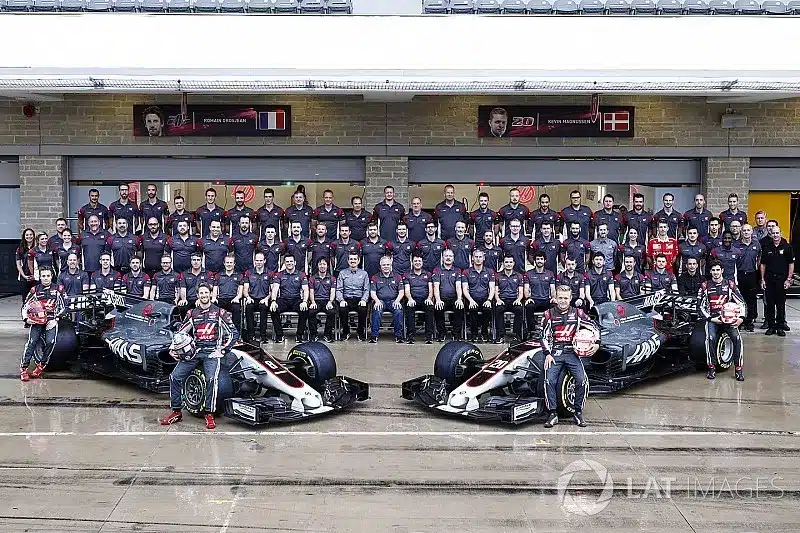
Works and Customer teams have a few key differences between them:
- Customer teams are NOT directly affiliated with their manufacturer
Whereas Works teams work in direct affiliation with their engine manufacturer and are an extension of the latter, Customer teams are different.
They’re separate entities with individual identities and goals from their engine manufacturer. Customer teams only buy the components from the manufacturer, and that’s where their relationship ends.
- Customer teams do NOT receive technical & financial support from their manufacturer
Works teams receive both financial and technical assistance from their manufacturer, with which they work in an integrated partnership.
Customer teams have to use their own budgets and technical resources. Their engine manufacturers only provide the components and don’t offer other integrative assistance.
So, teams will have to make sure that the manufacturer components fit in with their car’s chassis, and so on.
- Customer teams do NOT have access to exclusive technologies
Compared to Works teams who have access to the latest technologies and proprietary developments from their manufacturer, Customer teams do not enjoy these benefits.
They use standard components bought from the manufacturer which are sold to any other team who’s using that particular manufacturer.
- Customer teams do NOT have the same brand identity as their manufacturer
Works teams will have the same brand and identity as their manufacturer since they are so closely integrated.
Customer teams are independent of their manufacturers and will maintain their unique identity and brand. They may, however, show the manufacturer’s logo on their cars.
- Customer teams do NOT influence the manufacturer’s development direction
Works teams often influence their manufacturer’s development direction even on its road car technologies. This happens through the team’s performance and feedback while on the track.
Customer teams have no such relationship to their manufacturer. They only focus on utilising the manufacturer’s components to enhance their performance on the track.
Conclusion
Works teams are an integral element of Formula 1, having defined the sport in more than one aspect.
During the 2023 season, we only have four Works teams – Ferrari, Red Bull, Mercedes, and Alpine.
In recent years, the FIA has tried (and succeeded) in making the races as fair as possible for everyone involved, so that customer teams aren’t at a disadvantage.
Nowadays, Works teams don’t necessarily have a direct competitive advantage in terms of track performance.
Rather, the close integration with their manufacturer provides better logistical support, increased efficiency in communication, better R&D synergy, and more effective long-term planning and development.
Even still, the FIA keeps introducing regulatory changes regularly, aiming to equalise the playing field for Works and Customer teams as much as possible.