What Does Box Mean in F1?
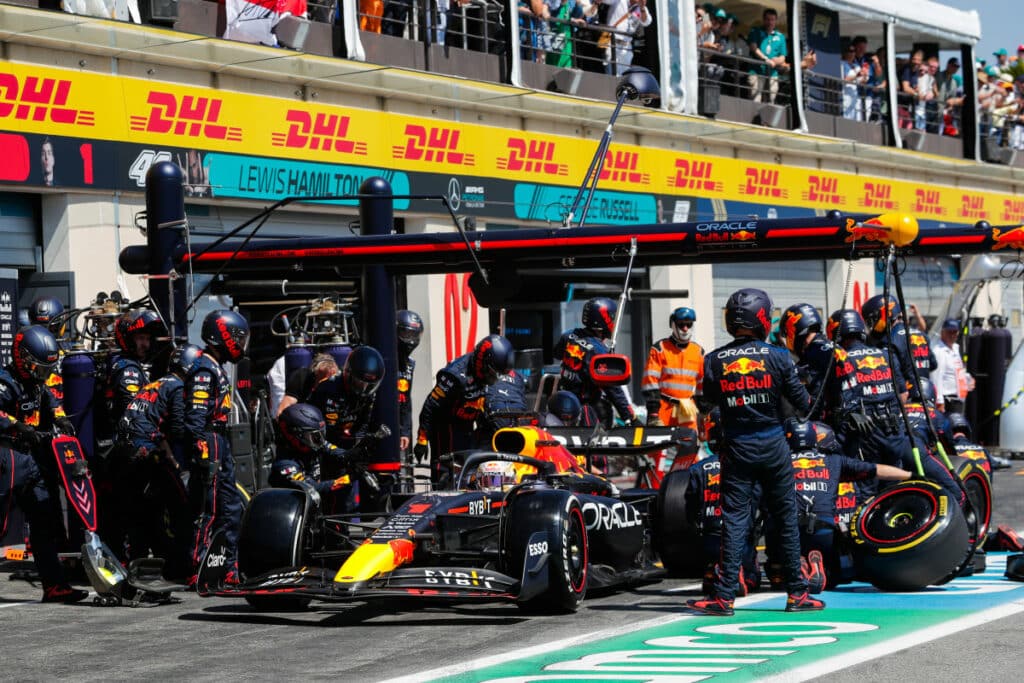
In Formula 1, the term “box” refers to the pit box or pit area in front of the team’s garage. If you’ve watched even one Formula 1 event, then you’ve likely heard the “box, box” or even “box, box, box” command uttered over the team radio to drivers during a race weekend.
Essentially, it’s an instruction for the driver to come take a pit stop as soon as possible. But why do technicians repeat the word? And why is it called “box” instead of “pit stop”?
That’s what we’ll find out in this article, among other interesting facts. Let’s go over the meaning and practical usage of “box” in Formula 1!
Why “Box” or “Box, Box”?
It’s more than likely you’ve heard the term “box” repeated multiple times during a radio announcement to a driver on the grid.
Typically, the technician will repeat the word to make sure the driver understands the command. There’s a twofold reason for the box command:
- To account for radio interference that could make the driver miss the command
- To ensure a quick acknowledgment of the pit stop command. The word “box” is easily distinguishable and a fairly unique jargon in Formula 1
There’s no iron-bound rule about the number of times a “box” command is, and it doesn’t have different meanings depending on this aspect.
As for the origin of the term “box”, there are three possible explanations for this:
- The “pit box” concept that refers to the area where a driver will make a pit stop. The “box” command would refer to the pit box
- The German word for pit stop is “Boxenstopp”, and we know that F1 has had many German famous drivers and even more technicians. This term might have been adopted and adapted into English
- “Box” is a fairly distinct term in F1 that’s easily recognizable and hard to confuse with something else. “Take a pit stop” takes longer to say and it also gives more chances for radio interference to occur.
The truth is likely in the middle. It’s fair that, due to the influence of many German drivers (Michael Schumacher, Sebastian Vettel, Nico Rosberg Nico Hülkenberg, etc.) and race engineers on the sport, the German “Boxenstopp” term was adapted to “box” when referring to a pit stop.
But it’s not out of the question that the “pit box” concept led to “box” becoming a verb and being used as a radio command for a pit stop.
“Box” is also phonetically distinctive from other words like “pit” or “pit stop”, allowing the driver to receive the message quickly and efficiently.
There’s also no other jargon-specific term in Formula 1 that sounds like “box”. So, the driver will easily pick it up and won’t confuse it with something else.
When used as a noun, box refers to the drivers’ servicing area in the pit lane.
Pit Box as Part of The Pit Stop Strategy
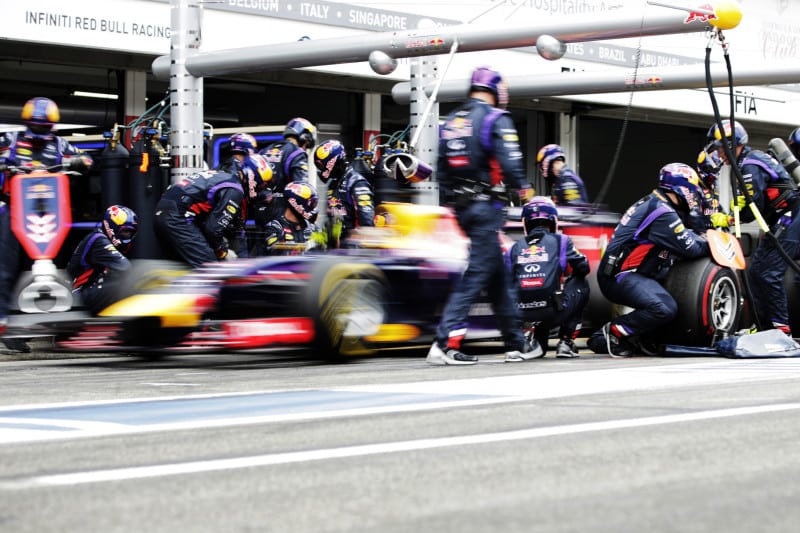
When a team instructs their driver to box, they are telling him to come into the pit lane when they next get to the pit entry and make a pit stop when they get to their team’s garage area.
The “box, box” radio communication is one part of the so-called Pit Stop Strategy, which involves several other elements like:
- Efficient pit stops – A pit stop typically involves changing tyres, fuelling, and making various other adjustments to the car. All this has to happen seamlessly
- Pit crew roles and good coordination – A pit stop crew is typically composed of 20+ individuals, each with a specific role. They all have to work in seamless coordination to ensure an effective pit stop
- Timing and strategy of pit stops – Pit stops need to be timed perfectly based on the driver’s current position in the race, their tyre wear, weather conditions and other aspects. That’s why the team constantly adjusts their pit stop strategy on the fly
- “Box in” and “box out” commands – Boxing in means to enter the pit box, while boxing out means to exit the pit box. These are radio commands provided to the driver
The Pit Stop Strategy is the coordinated act of having a driver take a pit stop during a race, changing the tyres, and doing any other maintenance job as efficiently as possible.
Due to how vital time is during a race, pit boxing has almost become an art, with the fastest teams being able to complete the entire process in under 2 in some cases.
The less time a driver and team take to perform a pit stop, the better the overall race performance is.
The Efficiency Problem of Pit Stops
When it comes to pit stops during an F1 race, efficiency is 90% of the focus, with the final 10% being consistency and safety.
A team has to finish a pit stop in as few seconds as possible to let the driver go and continue the race.
A good reading source for this is Mercedes’ article on box pit stopping. Here’s what they say:
“Modern F1 pit stops have become ridiculously fast. Many happen in 2.5 seconds or less. During that time a car needs to hit its marks, be raised up on the jacks, four wheelnuts removed and placed back on, four tyres swapped for fresh ones, the car dropped back to the floor and drivers pulling away from the box.”
Here’s what a Mercedes pit stop involves, in short:
- 12 crew members changing the tyres, 3 for each tyre, like so:
- One loosens and tightens the wheel nut
- One removes the old tyre
- One places the new tyre
- 2 crew members raise the car from the front and back using jacks
- 2 crew members are on the side with spare front and rear jacks in case the regular ones fail
- 2 crew members are at the middle points of the car, on both sides, to keep it steady during the operation. They also clean the mirrors, radiators, and driver visor
- 2 crew members are at both front corners of the car, adjusting the front wing
- 1 crew member oversees the pit stop and pit lane traffic (other cars), and will give the gantry system the green lights to release the driver
- 1 crew member oversees the pit stop from the side can stop the green light in the case of emergencies
In total, Mercedes is using 22 crew members for a pit stop but the FIA has no regulations that limit the number of pit crew members.
It’s up to every individual team to judge the number of personnel that are necessary for an effective pit stop.
The answer is most likely “however many it takes for the pit stop to be maximally efficient” and safe.
Pit Stop Variations and Race Dynamics
There are also different variations in the pit stop strategies employed by F1 teams during the season. Several factors contribute to these strategies, including:
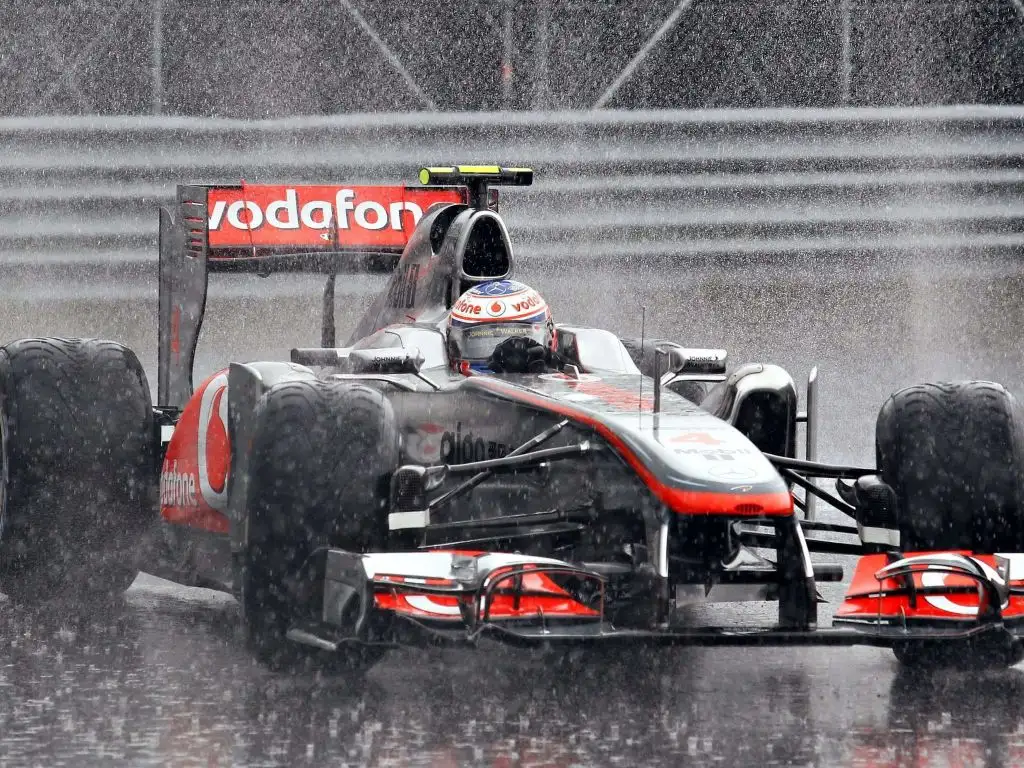
- Weather and track conditions that may require different tyre compounds
- Overall team objectives and strategy for the race
- Specific needs of the driver during the race
- The car’s condition at any given point during the race weekend
- Whether there is a safety car window
- Whether there are issues with the power unit
All of these could impact the pit stop strategy, but the “box, box” command will always remain the same for the reasons outlined above.
Furthermore, teams may also use strategic pit stops to gain the upper hand over the competition in some cases.
For instance, a well-timed pit stop could help a driver defend against competitors or gain several positions with fresh tyres. The “undercut” pit stop strategy is a very effective tool when timed correctly, for instance.
Then again, pit stops can also go wrong through no fault of the team or driver. From equipment malfunctions to communication errors, radio interference, and traffic on the pit lane, there are many challenges to achieving a flawless pit stop.
How Do Drivers Respond to Box Radio Commands?
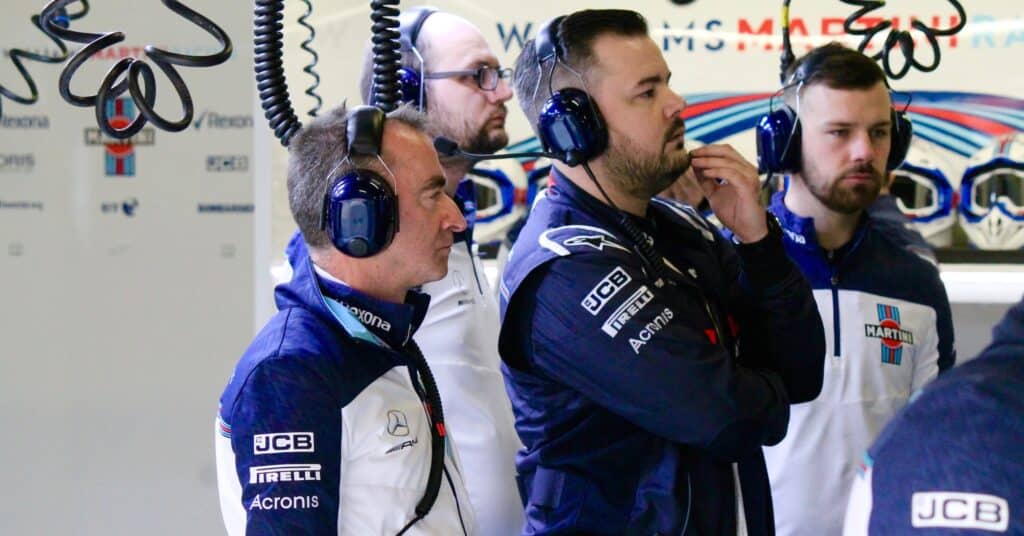
When a driver receives the “box, box” command via radio and acknowledges it, he knows it’s time to make a pit stop.
The driver will either confirm this via radio or press the Yes/No button on their steering wheel to show that they’ve received and understood the message.
Then, the driver will go to the pit box through the pitlane and make a pit stop. Hopefully, it’ll be a short one. They’ll be back in the race in a couple of seconds after the pit stop, depending on the amount of traffic in the pit lane.
If a driver does not acknowledge the “box, box” command, the technician will repeat the message immediately.
However, the driver doesn’t necessarily have to listen to the “box” radio command. They can instead choose to go for another lap if they think there’s more advantage to be had.
Of course, they will communicate this with the team via radio and come to a joint decision on the matter. No driver will let ego dictate their decision-making.
Knowing how to pit stop effectively is an art form in Formula 1, and one of the crucial skills a driver needs to learn if they want to make it big.
Typically, a team will consider a driver’s pit stop performance when evaluating their overall racing capabilities.
The difference between a good and a bad pit stop can quite literally win or lose the race, especially in those last moments of a Grand Prix.
Conclusion
The “box” or “pit box” is a core element of Formula 1 because it defines the seamless coordination between drivers and their teams in real-time.
When the box radio command comes on, a driver knows that it’s time to make a pit stop, or at least consider making one. Outside of the technical team, only the driver is in a better position to make this decision based on experience on the track.
Knowing when to listen to the box command and when to take a chance can make the difference between pole position and 2nd place, in some cases.
Typically, though, drivers will listen to the box command and follow the team strategy that they’ve agreed to use beforehand.
Only if an emergency occurs will a driver choose to ignore a box command, and even then, it’s not a decision they make easily.
Too much is at stake, and a wrong decision can seal the race!